- 글번호
- 791755
Groundbreaking Ceremony Held for ODeL Dedicated Building under the KOICA Project for Enhancing the Distance Education Environment at Makerere University in Uganda
- Writer
- 국제협력단
- Hits
- 38
- Date
- 2026.03.26
- 수정일
- 2026.03.26
Korea National Open University (KNOU) is implementing international cooperation projects aimed at supporting digital transformation and strengthening e-learning capacity in higher education institutions in developing countries.
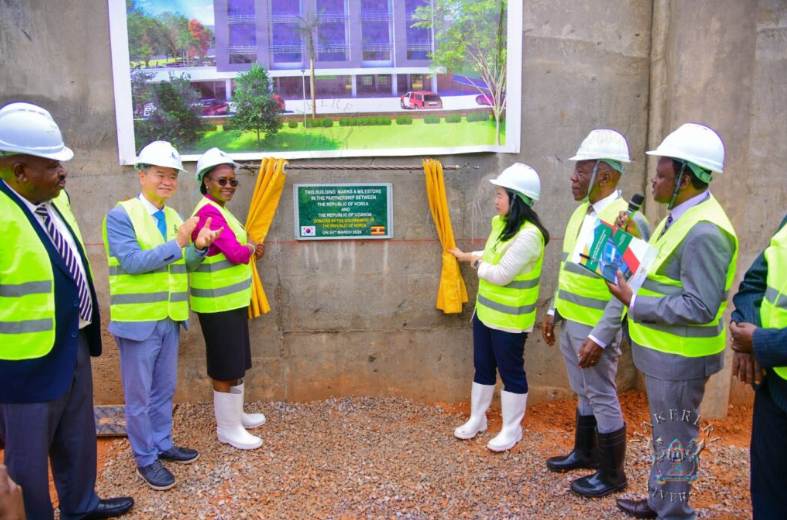
As part of these efforts, KNOU is participating in the KOICA Project for Enhancing the Distance Education Environment at Makerere University in Uganda. Makerere University recently announced its Open, Distance and e-Learning (ODeL) Masterplan and held a groundbreaking ceremony for a dedicated ODeL building on March 24, 2026.
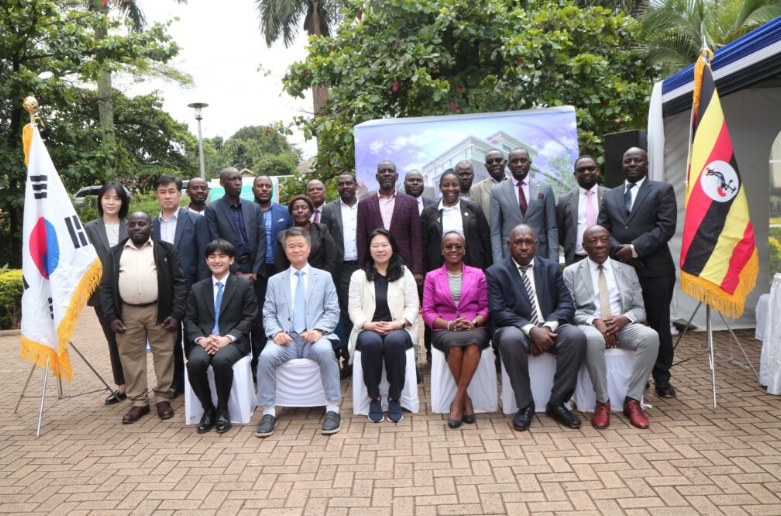
The ceremony brought together Ms. Jihee Ahn, KOICA Uganda Country Director; Prof. Jin Gon Shon of KNOU, who serves as the Project Manager; Prof. Sarah Ssali, representing Vice Chancellor Prof. Barnabas Nawangwe; and Dr. Silas Ngabirano, representing the University Council, along with university officials, government representatives, and development partners.
Funded through a grant of approximately USD 12.2 million from the Government of the Republic of Korea, the project stands as a representative example of educational cooperation between the two countries. In particular, approximately USD 3.75 million has been allocated to the construction of the ODeL dedicated building, which is scheduled for completion by August 2027 and is expected to serve as a key hub for distance education. The initiative is anticipated to help bridge the gap between traditional teaching methods and digital-based learning, while strengthening an e-learning-centered education system.
Meanwhile, a group of experts from KNOU contributed to the development of Makerere University’s ODeL Masterplan. In addition, KNOU has been implementing a series of invitational training programs for faculty and staff of Makerere University since 2025. As the final phase of the program, 22 participants are scheduled to be invited to KNOU in June 2026 to share expertise in e-learning content development.
This collaboration is particularly meaningful in that it goes beyond infrastructure development to encompass capacity building and knowledge sharing. It is also expected to contribute to expanding access to quality higher education and to serve as a foundation for advancing distance education and educational innovation across the African region.